Why is Pac-Man called Pac-Man? From paku-paku to Puck Man to the rename
The name is a sound effect, a pun and a piece of risk management all at once. Here is the full etymology and the vandalism fear that changed one letter.
Paku-paku: the sound of eating
In Japanese, paku-paku (パクパク) is onomatopoeia for the motion of a mouth opening and closing repeatedly, the way you might describe a child wolfing down food or a fish gulping. Toru Iwatani built his entire concept around eating, so a name derived from that sound was the obvious choice. Paku-paku taberu, to eat with gusto, is everyday speech, and the name immediately told Japanese players what the character did.
Why "Puck" and not "Paku"
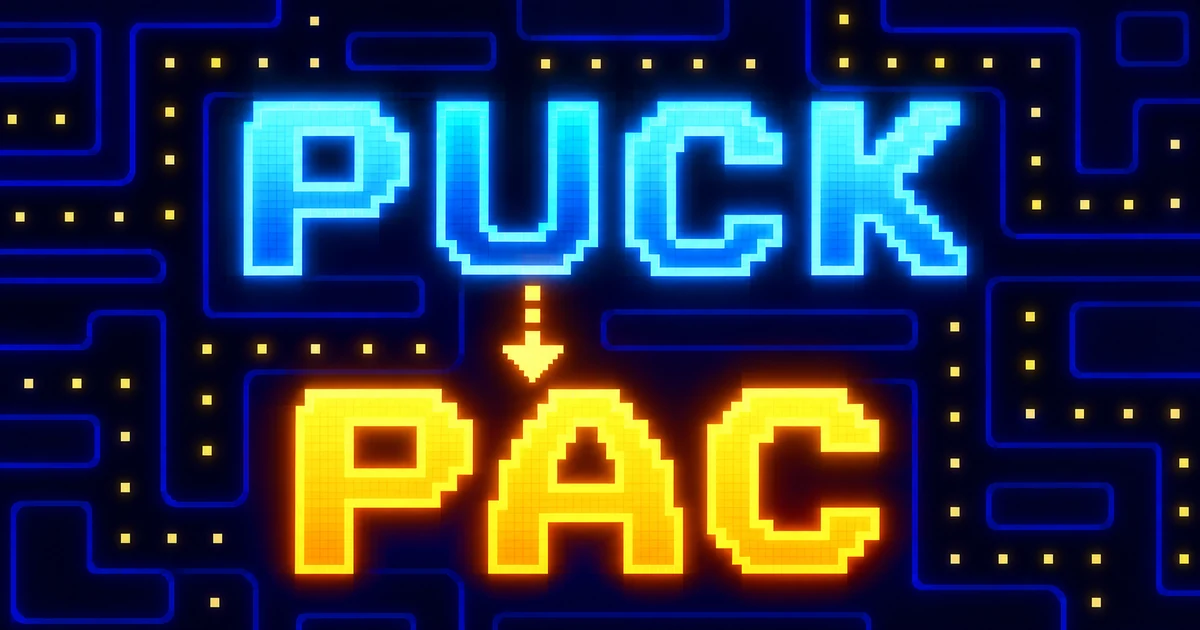
When Namco romanised the name for the cabinet, it used "Puck", which approximated the Japanese pronunciation and happened to look like a real English word. The hockey puck reading also fit the character's flat, disc-like shape. So the game shipped in Japan in May 1980 as Puck Man, with that spelling on the marquee and side art.
The rename for North America
Midway, the Chicago company that licensed the game for the United States, worried about one specific problem: on an arcade cabinet in a dim room, the letter P in "Puck" could be scratched or painted into an F with a single stroke. Arcade operators would be stuck with obscene cabinets, and the game's family-friendly positioning, the whole point of Iwatani's design, would be undermined. Changing the vowel to "Pac" preserved the sound while removing the risk, and Pac-Man launched in October 1980. The spelling spread worldwide, and even Namco adopted it for later Japanese releases. The release timeline is in pacman original release year.
How the name shaped the franchise
- Ms. Pac-Man (1982) extended the convention and created the "Mr." question that still sends people searching; we resolve it in mr pacman versus ms pacman explained.
- "Pac-" as a prefix became a brand device: Pac-Land, Pac-Mania, Pac-Attack, Pac-Pix, Pac-Man World.
- "Waka-waka", the English nickname for the eating sound, is a Western coinage; Japanese players never used it. See the pacman terminology explained for other terms.
- The hyphen is official. Bandai Namco writes Pac-Man with a hyphen and capital M; "Pacman" and "pac man" are informal spellings that dominate search engines because they are faster to type.
What the ghosts are called, by comparison
The naming logic for the ghosts followed a different path. In Japan each ghost had a descriptive nickname for its behaviour (chaser, ambusher, fickle, feigned ignorance) and a colour-based name; Midway replaced those with the friendlier Blinky, Pinky, Inky and Clyde. Every variant is tabulated in blinky pinky inky and clyde.
Is "Mr Pacman" a real name?
Not for any arcade game. The original character is simply Pac-Man; "Mr." entered common usage only as a way to distinguish him from Ms. Pac-Man, and Bally used "Mr. & Mrs. Pac-Man" on a 1982 pinball table. This site borrows the colloquial name for its mr pacman arcade guides, where you can play original maze games and read the rest of the full pacman timeline explained.
From the blog
- what pacman plus changed — Pac-Man Plus explained: Midway's 1982 revision with a green maze, new bonus items, power p…
- collecting pacman memorabilia — A Pac-Man collectibles overview: original cabinets, Coleco and Tomy tabletop games, the Mi…
- pacman ce dx strategy — Pac-Man Championship Edition DX tips: how to build long sleeping-ghost trains, when to eat…
Frequently asked questions
What does Pac-Man mean?
It comes from paku-paku, the Japanese sound of a mouth repeatedly opening and closing while eating.
Why was Puck Man changed to Pac-Man?
Midway feared that the P in Puck could easily be vandalised into an F on arcade cabinets, so it changed the spelling for the 1980 US release.
Was Pac-Man ever called Puck Man outside Japan?
A small number of early European cabinets carried the Puck Man name, which is why original Puck Man cabinets are collector items today.
Is it Pac-Man, Pacman or Pac Man?
Pac-Man with a hyphen is the official spelling. The others are common informal variants.
What is waka-waka?
An English nickname for the eating sound effect, popularised by Western players and later by the Buckner & Garcia song.