Pac-Man ghost names: Blinky, Pinky, Inky and Clyde, with every variant
Each ghost has at least three names: an English name, an English nickname and a Japanese name describing its behaviour. Here is the full table and the stories behind each.
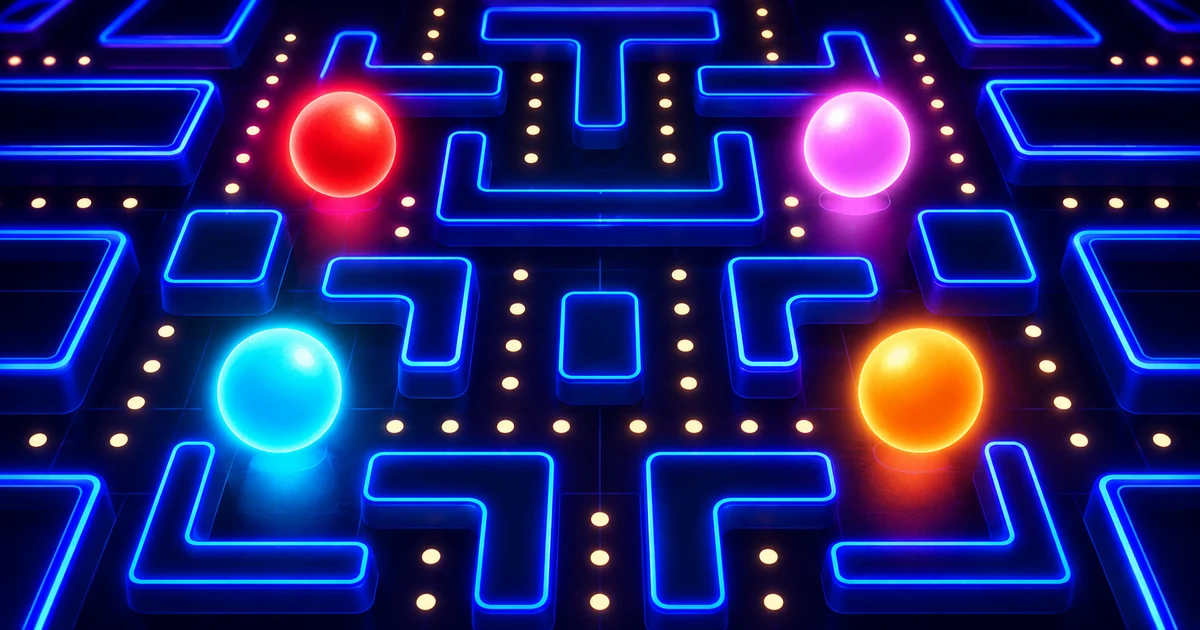
The four ghosts at a glance
| Colour | English name | Nickname | Japanese name | Japanese nickname | Behaviour |
|---|---|---|---|---|---|
| Red | Blinky | Shadow | Akabei | Oikake (chaser) | Targets Pac-Man's tile directly |
| Pink | Pinky | Speedy | Pinky | Machibuse (ambusher) | Targets four tiles ahead of Pac-Man |
| Cyan | Inky | Bashful | Aosuke | Kimagure (fickle) | Uses Blinky's position to flank |
| Orange | Clyde | Pokey | Guzuta | Otoboke (feigning ignorance) | Chases when far, retreats when near |
Why the nicknames are misleading
The nicknames shown on the arcade attract screen, Shadow, Speedy, Bashful and Pokey, were chosen by Midway to sound playful, and two of them actively mislead. "Speedy" suggests Pinky is faster than the others, but all four ghosts share the same base speed; her speed is strategic, cutting ahead of you rather than following. "Pokey" implies Clyde is slow, but his movement speed is identical too; he simply breaks off the chase when he gets within eight tiles. The Japanese nicknames are far more accurate: chaser, ambusher, fickle and the one who pretends not to care. The precise logic is tabulated in ghost targeting logic in pacman.
Blinky, the red ghost
Blinky starts outside the ghost house and is the only ghost that gets faster during a board. When a set number of dots remain (20 on level 1, rising on later boards), he speeds up, and again when half that number remains. Players call this state "Cruise Elroy". His Japanese name, Akabei, literally means "red guy".
Pinky, the pink ghost
Pinky is the first ghost to leave the house at the start of a board. Because she targets four tiles in front of you, she is the ghost most likely to meet you head-on at a junction. A famous bug means that when Pac-Man faces up, her target is four tiles up and four tiles left, which is why she sometimes seems to drift when you climb a corridor.
Inky, the cyan ghost
Inky's target is calculated from two points: a tile two spaces ahead of Pac-Man, and Blinky's position. The game draws a vector from Blinky to that tile and doubles it. The result is that Inky behaves like a shadow when Blinky is far away and like a pincer when Blinky is close, which is why he was called fickle. He waits in the house until 30 dots have been eaten on level 1.
Clyde, the orange ghost
Clyde is the last to leave, after 60 dots on level 1. He targets Pac-Man exactly like Blinky until he is within eight tiles, then switches his target to his scatter corner at the bottom left. The practical effect is a ghost who loiters near the lower left of the maze, which is why advanced patterns often clear that area early.
Ghost names in other versions
- Ms. Pac-Man (1982): the orange ghost is renamed Sue; the other three keep their names. See pacman vs ms pacman.
- Jr. Pac-Man (1983): the orange ghost becomes Tim.
- Pac-Mania (1987): adds a green ghost, Funky, and a grey one, Spunky.
- The 1982 cartoon: the ghosts work for Mezmaron and have more human personalities; the family of characters is listed in every pacman character explained.
- Pac-Man Championship Edition: the same four names, with sleeping ghosts in the DX sequel.
Why ghosts and not monsters
Namco's internal documentation called them monsters, and the Japanese cabinet used the word obake, which covers spirits and shape-shifters more broadly. Midway's marketing settled on "ghosts" for English audiences and the name stuck. Toru Iwatani chose soft, cute designs so that being caught felt comic rather than frightening, a decision explained in pacman creator toru iwatani. For a one-line definition of every term used here, keep the pacman slang and terms handy, and to see four personalities in action, try the drones in the games on the play mr pacman style games.
From the blog
- cutting corners in pacman — How Pac-Man cornering works: pre-turning before a junction so Pac-Man cuts the corner diag…
- google pacman doodle tricks — How to play the Google Pac-Man doodle with two players: click Insert Coin twice to add Ms.…
- how inky flanks pacman — Inky, the cyan Pac-Man ghost: nickname Bashful, Japanese name Aosuke and nickname Kimagure…
Frequently asked questions
What are the names of the four Pac-Man ghosts?
Blinky (red), Pinky (pink), Inky (cyan) and Clyde (orange).
Which Pac-Man ghost is the fastest?
None is faster at base speed. Blinky becomes faster late in a board in his Cruise Elroy state, and Pinky's nickname Speedy refers to her ambushing, not her speed.
What is the orange ghost called in Ms. Pac-Man?
Sue. In Jr. Pac-Man it is Tim.
Why is Inky called Bashful?
Because his flanking behaviour makes him appear to hesitate or shy away when Blinky is far from Pac-Man.
What are the Japanese names of the ghosts?
Akabei, Pinky, Aosuke and Guzuta, with behaviour nicknames Oikake, Machibuse, Kimagure and Otoboke.