The Pac-Man arcade cabinet: original, cocktail, cabaret and replicas
The yellow upright is one of the most recognisable objects of the 1980s. Here is what Midway built, how to tell an original from a conversion, and what a replica gives up.
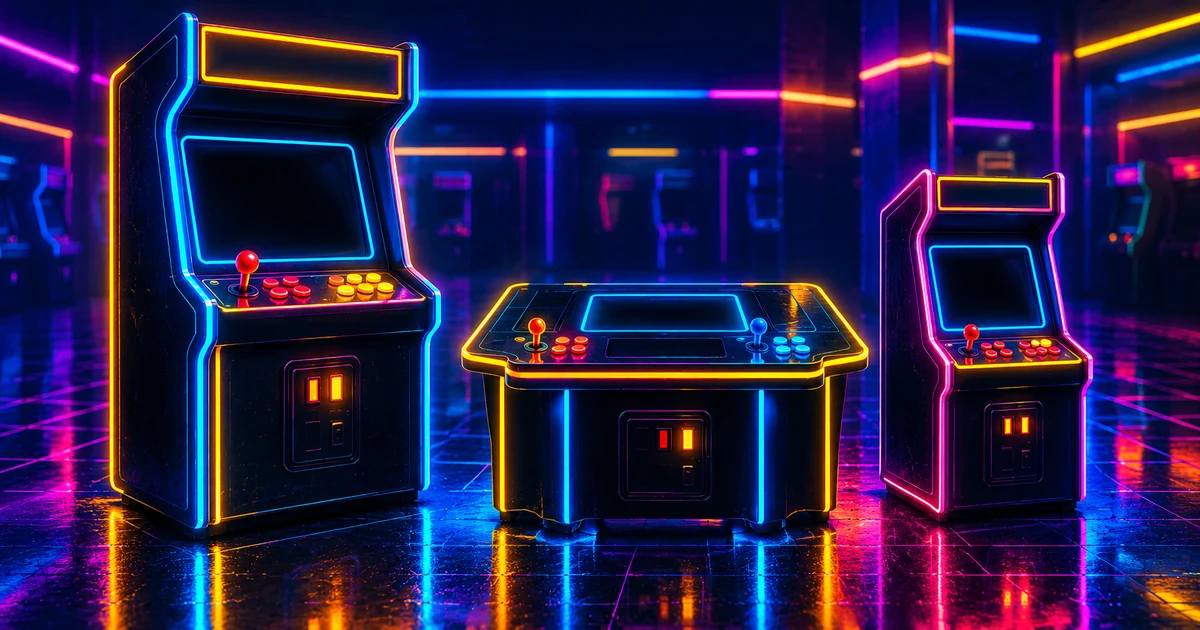
The three Midway formats
- Upright. The standard 1980 cabinet: yellow body, blue and black side art, a 19-inch vertical colour monitor and a single four-way joystick. Around 100,000 were sold in North America.
- Cocktail (table). A sit-down table with the monitor facing up and controls at both ends; the screen flips for player two. Popular in bars and pizza restaurants.
- Cabaret (mini). A narrower, shorter upright with a 13-inch monitor, built for locations with less floor space. Rarer than the other two.
The Japanese original was the Puck Man cabinet by Namco, white with different art; its story is in the original puck man cabinet.
Inside the cabinet
The game board is a Namco design built around a Z80 processor, a custom sound chip and a video system drawing 8-by-8 tiles and 16-by-16 sprites; the maze geometry those tiles define is described in pacman maze layout. A set of DIP switches on the board controls lives, bonus life, coinage and difficulty (see lives and bonus life settings). The original ROM chips are what collectors value: bootleg speed-up chips were often installed in bars and are covered in bootleg pacman speedup kit.
Buying an original: what to check
- Side art and marquee. Reproductions are common and acceptable, but originals raise the price. Look for consistent fading and wear.
- Monitor. A working original CRT is a major cost item; check for burn-in of the maze, which indicates heavy use but also authenticity.
- Board. Confirm it is a Midway Pac-Man board, not a conversion or a modern multi-game board, if you want originality. Ask whether the ROMs are stock.
- Joystick. Original Wico-style four-way sticks are prized; an eight-way replacement makes cornering unreliable.
- Serial plate. Early serials and matching board numbers add value.
Working originals typically sell for a few thousand dollars, with condition and originality moving the price more than anything else. Project cabinets with dead monitors cost far less.
Replicas and home versions
Three-quarter-scale replicas and countertop units from licensed makers run the original code on emulation and usually include Ms. Pac-Man and other titles. They are far cheaper, lighter and need no CRT maintenance, but purists note two compromises: LCD screens show the vertical game with borders, and the joysticks are often eight-way, which affects the cornering described in pre turn trick in pacman. For a no-hardware option, the games on the mr pacman maze games homepage run in any browser.
More from the guides
- every pacman character explained — All Pac-Man characters explained: Pac-Man, Ms. Pac-Man, Blinky, Pinky, Inky, Clyde, Sue, J…
- pacman fever pop culture — Pac-Man Fever explained: the 1982 Buckner & Garcia top-ten single, the Hanna-Barbera carto…
- every pacman fruit explained — Every Pac-Man fruit in order: cherry 100, strawberry 300, orange 500, apple 700, melon 1,0…
Frequently asked questions
How much is an original Pac-Man arcade machine worth?
Working Midway uprights typically sell for a few thousand dollars; rare Puck Man cabinets and pristine originals fetch far more.
What joystick does Pac-Man use?
A four-way joystick. Eight-way sticks make diagonal inputs ambiguous and hurt cornering.
Are Arcade1Up Pac-Man cabinets accurate?
They run emulated versions of the arcade code and play well, with an LCD screen and a lighter build.